

Gongfu tea, or gongfu cha, means brewing with skill: a lot of leaves in a small gaiwan or pot, hot water, and steeps measured in seconds instead of minutes, repeated many times over. It isn't a ceremony you perform for an audience; it's just a method that pulls more flavor out of good tea. You can learn it in a single sitting, with gear you probably already own.
The short version
- Gongfu cha means "tea made with skill or effort." No special talent, and no altar, required.
- The core idea is simple: small vessel, lots of leaf (about 1 gram per 15-20 ml of water), very short steeps, many rounds.
- A 100-150 ml gaiwan and one small cup is enough to start. You don't need a carved wooden tea table.
- The same leaves give six to twelve or more infusions, and each one tastes a little different.
- It flatters modest tea because you control every steep and can stop it before it turns bitter.
In this post
What gongfu tea actually means
The name gets mistranslated into something mystical. Gongfu (工夫, or 功夫) just means skill, or the effort you put into doing something well, the same word behind old kung fu movies. Gongfu cha is "tea made with care," not "tea ceremony." The elaborate versions you've seen on video, with matching cups and slow synchronized pouring, are real, but they're the dress-up edition.
In Fujian and Chaozhou, where this style of brewing comes from, most people do it at a kitchen table with a chipped gaiwan and no audience. My great-uncle in Fujian brewed Tieguanyin this way every afternoon, refilling the same little pot a dozen times while he grumbled about the news. Nobody called it a ceremony. It was just how you drank tea worth drinking.
What makes brewing "gongfu" isn't the props. It's the ratio and the timing: a lot of leaf, a little water, and steeps short enough that you can repeat them all afternoon.
What you actually need
Here's the honest minimum: a small brewing vessel and something to drink from. That covers it.
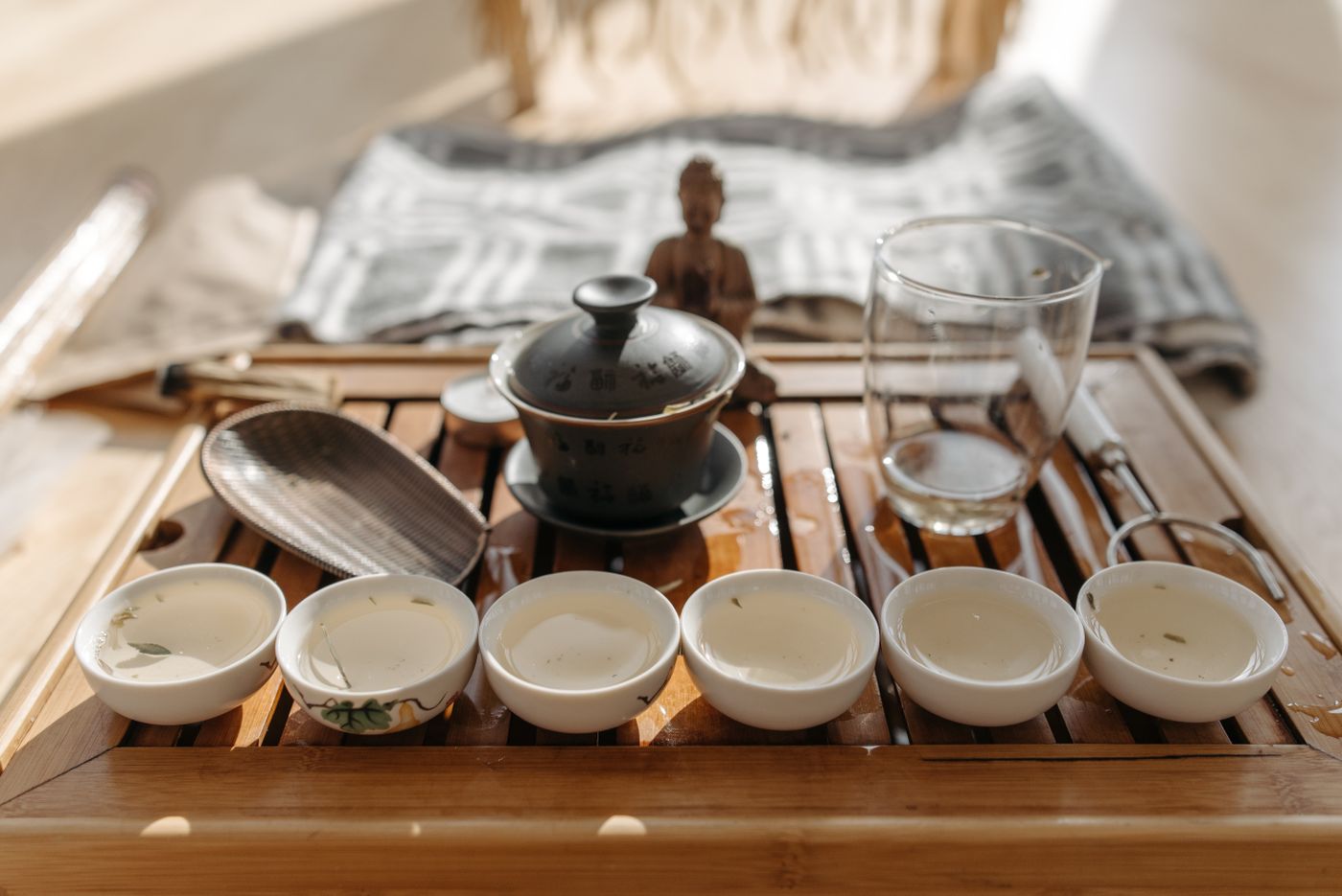
A gaiwan (a lidded bowl of roughly 100 to 150 ml) is the classic choice because it's cheap, easy to rinse, and lets you smell the wet leaves off the lid. A small teapot works just as well. If you want to understand the vessel before buying one, I wrote a full guide to the gaiwan, and no, we don't sell one, so that isn't a pitch.
Two things make it easier but aren't required: a cha hai, or "fairness pitcher," that you pour the finished steep into so every cup comes out the same strength, and a small strainer. You can skip both at the start and pour straight into your cup.
How to brew gongfu style, step by step
Six steps, and three of them are really just "pour it out."
- Warm the gaiwan with hot water, then tip it out. This wakes up the aroma.
- Add the leaves. For a 100 ml gaiwan, that's roughly 5 to 7 grams, enough to cover the bottom generously. It's more than feels reasonable if you grew up on teabags.
- Rinse, if the tea is tightly rolled or aged. Pour hot water over pu-erh or rolled oolong and immediately tip it out. You're not washing off dirt; you're waking the leaves so the first real steep pours evenly.
- First steep. Add water, put the lid on, and pour it straight back out after about 5 to 15 seconds. Shorter than feels right.
- Empty the vessel completely every single time. Leaves left sitting in water turn bitter quickly.
- Keep going. Add five to ten seconds each round. A good tea keeps giving for six, ten, sometimes fifteen steeps, and the middle rounds are usually the best ones.

The gongfu cheat sheet (leaf, heat, time)
Treat these as starting points, not rules. The water volumes assume a 100 ml gaiwan, so taste as you go and adjust the next steep.
| Tea type | Leaf / 100 ml | Water temp | First steep | Rounds to expect |
|---|---|---|---|---|
| Green (Longjing, Biluochun) | 4-5 g | 80-85°C / 175-185°F | 10-15 sec | 4-6 |
| White (Moonlight, Silver Needle) | 4-5 g | 85-90°C / 185-195°F | 15-20 sec | 5-8 |
| Rolled oolong (Tieguanyin) | 6-7 g | 95-100°C / 205-212°F | 10-15 sec | 6-10 |
| Black / red (Dianhong) | 4-5 g | 90-95°C / 195-205°F | 5-10 sec | 4-6 |
| Pu-erh, raw or ripe (rinse first) | 6-7 g | 95-100°C / 205-212°F | 5-10 sec | 8-12+ |
Which teas love gongfu (and which don't)
If you're just starting, reach for a rolled oolong like Tie Guan Yin. The balled-up leaves open a little more with each steep, so you can watch the tea change in the cup, and they forgive sloppy timing.

Pu-erh is the other natural fit. Both raw (sheng) and ripe (shou) were practically built for short steeps and long sessions, and they keep going well past ten rounds.
Black tea like Dianhong is excellent gongfu too; just keep the early steeps short, because it gives up its color and tannin quickly. Green and white teas work with cooler water and fewer rounds, so expect four or five good cups rather than ten.
The only teas I'd skip are the ones already ground to dust inside teabags. There's nothing left in them to unfold.
Gongfu vs. Western vs. grandpa style
None of these is the "correct" way. They're tools for different moments, and I use all three in a normal week.
| Approach | Vessel | Leaf-to-water | Steeping | Best for |
|---|---|---|---|---|
| Gongfu | Small gaiwan or pot (100-150 ml) | High (about 1 : 15-20) | Seconds, many rounds | Tasting a tea's full range |
| Western | Mug or teapot | Low (about 1 : 50) | 2-4 min, one or two steeps | Convenience, one solid cup |
| Grandpa | Tall glass | Low, leaves stay in | Keep topping up with water | All-day sipping, zero gear |
If you want the full rundown on all of them, including the no-equipment methods, that's in the loose leaf brewing guide.
Why it makes cheap tea taste better
Gongfu won't rescue stale supermarket tea. But give it a decent leaf and it does something Western brewing can't: it splits one tea into a dozen small, changing cups, and it hands you the off-switch. The moment a steep threatens to turn bitter, you've already poured it out, and the leaves are sitting there waiting for the next round.
That control is the whole trick. You're not brewing one cup of tea; you're tasting a leaf across its entire life in a single sitting. After you've done it a few times, going back to one four-minute steep can feel like reading only the last page of a book.
FAQ
What does gongfu tea mean?
Gongfu cha (工夫茶) means "tea made with skill or effort." It refers to a brewing method (small vessel, high leaf-to-water ratio, short repeated steeps), not to a formal ceremony. The showy, synchronized version exists, but everyday gongfu brewing is casual and quick.
How much tea do I use for gongfu brewing?
A good starting point is 1 gram of leaf per 15 to 20 ml of water, so about 5 to 7 grams in a 100 ml gaiwan. That's far more leaf than Western brewing uses, which is exactly why the steeps have to be so short.
How many times can you steep tea gongfu style?
Most decent teas give six to twelve infusions, and a good oolong or pu-erh can push past fifteen. Each steep tastes slightly different, and the middle rounds are often the best. You stop when the cup goes thin and watery.
Does gongfu tea have more caffeine?
Because you use more leaf and drink many steeps, a full gongfu session can add up to more total caffeine than one Western cup, though each tiny cup holds less. Amounts vary by tea and brewing time; the Mayo Clinic caffeine chart is a useful reference.
Do I need a gaiwan to brew gongfu?
No. A gaiwan is convenient and cheap, but a small teapot works just as well, and you can start with a mug and a strainer. What matters is the ratio and the short steeps, not the exact vessel.
If you want a tea that shows off what gongfu can do, start with a rolled oolong like our Tie Guan Yin and give it six steeps before you judge it.