

A gaiwan (say "guy-wan") is a lidded porcelain bowl for brewing loose-leaf tea. You steep the leaves right in the bowl, hold the lid back a crack, and pour the tea out through the gap while the lid keeps the leaves behind. It's the most versatile brewing vessel in Chinese tea, and the one I actually pack when I travel, because it does the job of a whole tea set in one small piece.
The short version
- A gaiwan (literally "lid bowl") has three parts: a lid, a bowl, and a saucer. You brew and pour from the same piece.
- It beats a metal infuser because the leaves get room to open, and you pour off every drop between steeps, so nothing sits and turns bitter.
- Hold it by the rim, not the body. The flared lip stays cool while the walls get hot.
- Buy 100 to 120 ml porcelain first. It handles almost any tea, from green to pu-erh.
- BornTea doesn't sell a gaiwan, and I won't pretend otherwise. What we sell is the tea worth brewing in one.
In this post
What a gaiwan actually is
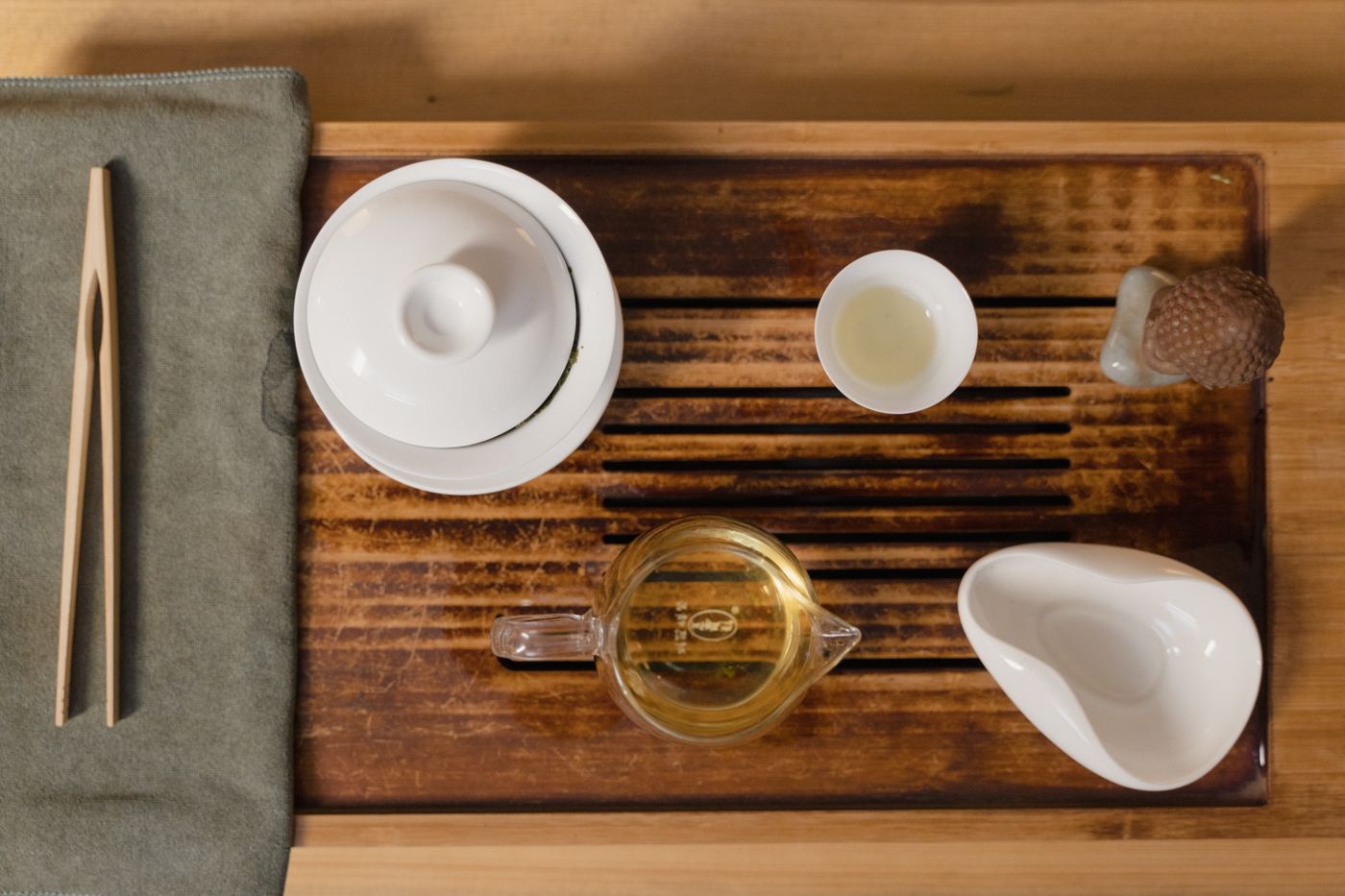
The word gaiwan (蓋碗) just means "lid bowl." That's the whole design: a lid, a bowl, and a saucer underneath. You brew the loose leaves in the bowl and use the lid to hold them back when you pour. No basket, no metal ball, no separate pot.
There's a poetic reading of the three parts that older tea drinkers like. The lid is heaven, the saucer is earth, and the bowl between them is the person. It's called sancai, the "three powers." Take it or leave it. What matters at the table is that those three parts hand you a brewer, a strainer, and a heat shield in one object you can work with one hand. If you want the encyclopedic version, Wikipedia's gaiwan entry has the history.
Why it beats a tea infuser for Chinese tea
Most people in the West meet loose tea through a little metal ball or a basket infuser. They work, sort of. But they fight the tea.
Good Chinese tea is whole-leaf. A rolled oolong opens into leaves the size of your thumb. Pu-erh comes off a pressed cake in chunks. Cram that into a mesh ball and the leaves can't move, so the water never really flows through them. You get weak tea with a squeezed, bitter edge.
A gaiwan fixes this two ways. The leaves get the whole bowl to swell and unfurl. And because you pour all the liquid off at the end of each steep, nothing is left stewing. You decide the exact second the steep ends. That one habit, taking the water off the leaves on time, is the biggest jump in tea quality most people ever make. It's the method behind my guide to brewing loose leaf tea, and a gaiwan is the easiest way to do it.
Porcelain has one more quiet advantage: it holds no flavor. Rinse it, and the same gaiwan brews a delicate green in the morning and an earthy pu-erh at night with nothing carried over.
How to hold a gaiwan without burning your fingers
Let's be honest about the part nobody warns you about. The first few times, you will burn your fingertips a little. Everyone does. Then you learn the grip and stop thinking about it.
Here's the grip: thumb and middle finger on the rim, that flared lip at the top, with your index finger resting on the knob of the lid. You lift the whole thing by the rim instead of hugging the hot bowl. The shape does the work. That outward flare throws the heat away from the edge, so the rim stays cool enough to hold while the walls are too hot to touch.
Two things make it easy. Don't overfill; keep the water about a centimeter below the rim so nothing scalds you when you tilt. And pour in one confident motion rather than a nervous dribble. Slide the lid to leave a thin gap on one side, tip, and let it run out in a few seconds. If you want to practice with nothing at stake, do a few pours with plain warm water first.

Gaiwan vs. teapot: which should you reach for?
This is the question I get most, so here's the short answer: if you're buying one thing, buy the gaiwan. Here's how the two compare for everyday brewing.
| Gaiwan (porcelain) | Clay teapot (Yixing) | |
|---|---|---|
| Flavor memory | None. Neutral, brews any tea | Absorbs flavor; dedicate one pot per tea |
| Best for | Everything, especially green, white, light oolong | Pu-erh, dark oolong, aged teas |
| Control over the steep | Highest. Pour off instantly and see the leaves | Good, but slower to pour and you can't see inside |
| Learning curve | A few minutes to learn the grip | Easy to pour, harder to choose and season |
| Cleaning | Rinse with water, done | Water only, never soap, and slow to dry |
| Travel | Packs flat, cheap to replace | Heavier and easier to break |
A clay teapot (the famous ones are Yixing zisha) is wonderful, but it's a specialist. The clay is porous, so it slowly takes on the character of whatever you brew in it, which is why people dedicate one pot to one type of tea. That's a lovely thing to do once you know you love pu-erh. It's a strange thing to buy before you do.
What size gaiwan to buy (and what to look for)
Get a 100 to 120 ml porcelain gaiwan. That's the size almost every experienced drinker reaches for, and the reason is the method: gongfu brewing uses a lot of leaf, a little water, and short steeps you repeat many times. A small bowl keeps that ratio honest and stays light enough to hold. A big 200 ml gaiwan looks generous, then burns your hand and makes too much tea per steep.
When you buy, look for three things: porcelain (neutral, and it lets you see the color of the liquor), a lid that sits snugly without rattling, and a rim that flares out a little so it stays cool. That flared rim matters more than any painted decoration.
Now the honest bit, since you're reading this on a tea shop's blog. We don't sell a gaiwan. Not yet. If you want one, buy from a maker who specializes in teaware and check for those three things. And if you'd rather not fuss with a gaiwan on the road at all, a plain lidded mug and a small strainer do the simple brew-and-sip job. But the gaiwan is the one I keep coming back to.
Which teas to brew in a gaiwan
All of them. That honest answer is the gaiwan's whole appeal. It truly shines, though, with teas that reveal themselves over many short steeps: rolled oolongs that open leaf by leaf, pu-erh that shifts from earthy to sweet, delicate greens you'd scorch in a mug.
The tea I reach for first is Tie Guan Yin, a rolled oolong from Anxi in Fujian, which is where half my family comes from. I grew up partly in Hong Kong, where the tea shops brew it in a gaiwan right on the counter for anyone who's buying. First steep, it's all orchid and butter. By the fourth the leaves have fully opened and the taste turns green and sweet. Watching a tight ball of leaf become a whole leaf in the bowl is half the reason I love this thing.

If you'd like to try that one, our Tie Guan Yin is the same rolled style. But any whole-leaf tea already in your cupboard will show you what a gaiwan does.
Here are rough starting points for a 110 ml gaiwan. Treat them as a place to begin, then trust your own mouth.
| Tea type | Leaf (for ~110 ml) | Water temp | First steep |
|---|---|---|---|
| Green (Dragon Well, Biluochun) | ~3 g | 75–80°C / 167–176°F | 15–20 sec |
| White (Silver Needle, Moonlight) | ~4 g | 85–90°C / 185–194°F | 20–30 sec |
| Light oolong (Tie Guan Yin) | ~5 g | 90–95°C / 194–203°F | 15–20 sec |
| Black (Dianhong) | ~4 g | 90–95°C / 194–203°F | 10–15 sec |
| Pu-erh (raw or ripe) | ~5 g | 95–100°C / 203–212°F | 10 sec, after a rinse |
Add ten to fifteen seconds to each following steep. A good tea will give you five, six, sometimes eight rounds, each a little different from the last. That's the payoff a teabag can't touch.
FAQ
What is a gaiwan used for?
Brewing loose-leaf tea. You steep the leaves in the bowl, hold the lid back to strain, and pour the tea into a cup or a small pitcher. It works for every kind of tea, and it's the standard vessel for gongfu-style brewing, where you steep the same leaves many times.
Is a gaiwan hard to use?
A little, for about ten minutes. The only real skill is the grip: hold the flared rim, not the hot body, with your index finger on the lid. Practice a few pours with plain warm water and you'll have it. After that it's quicker than fishing out an infuser.
What size gaiwan should I buy?
For most people, 100 to 120 ml porcelain. That size keeps the leaf-to-water ratio right for gongfu brewing and stays light enough to hold when full. Bigger gaiwans make too much tea per steep and get hot to handle. Buy small first.
Which teas can you brew in a gaiwan?
Any of them. Porcelain is neutral, so it carries no flavor between teas. It's especially good for rolled oolongs, pu-erh, and green teas, which open up and change over several short steeps. Rinse it between sessions and it's ready for the next tea.
Gaiwan or teapot: which should I get first?
A gaiwan. It's cheaper, more versatile, easier to clean, and it teaches you control over the steep. A clay teapot is worth adding later, once you know you love a specific tea like pu-erh and want a pot dedicated to it.
If you're just starting and don't know which tea to put in your gaiwan first, pick a green, an oolong, a black and a pu-erh from our loose leaf collection, run them through the same bowl, and find the one that's yours.