

Good jasmine tea tastes softly floral and naturally sweet, with a clean green tea body underneath and a perfume that lingers in the empty cup. It should never taste like soap or potpourri. When it does, you are usually drinking artificially flavored tea, or you have brewed real jasmine too hot for too long.
The short version
- Floral and sweet on top, clean and lightly grassy underneath. Not heavy, not perfumed.
- The soapy taste comes from artificial jasmine flavoring, over-scenting, or brewing water that is too hot.
- Good jasmine usually has few or no dried petals in it. The scent is in the leaf, not the flowers you can see.
- The base tea matters as much as the jasmine. Green base tastes fresh, white base tastes softer, black base tastes richer.
- Brew at around 80C (175F) for 2 to 3 minutes. Boiling water is what turns it bitter.
In this post
What jasmine tea actually tastes like
Start with the aroma, because that is most of the experience. Dry jasmine leaf smells like white flowers on a warm evening, sweet without being sugary, with a faint green hay note behind it. Once brewed, the aroma arrives before the taste does. You get it on the steam.
The liquid itself is milder than the smell suggests. A pale yellow-green cup, light in the mouth, gently sweet, with the grassy or chestnut character of the green tea base showing through. The floral part sits on top rather than inside the flavor, which is exactly right. Jasmine scenting is meant to lift a tea, not bury it.
The finish is where good jasmine gives itself away. It should fade slowly and cleanly, leaving a sweetness at the back of the throat and a trace of flower in the empty cup. Chinese drinkers actually smell the emptied cup on purpose. Try it once and you will keep doing it.
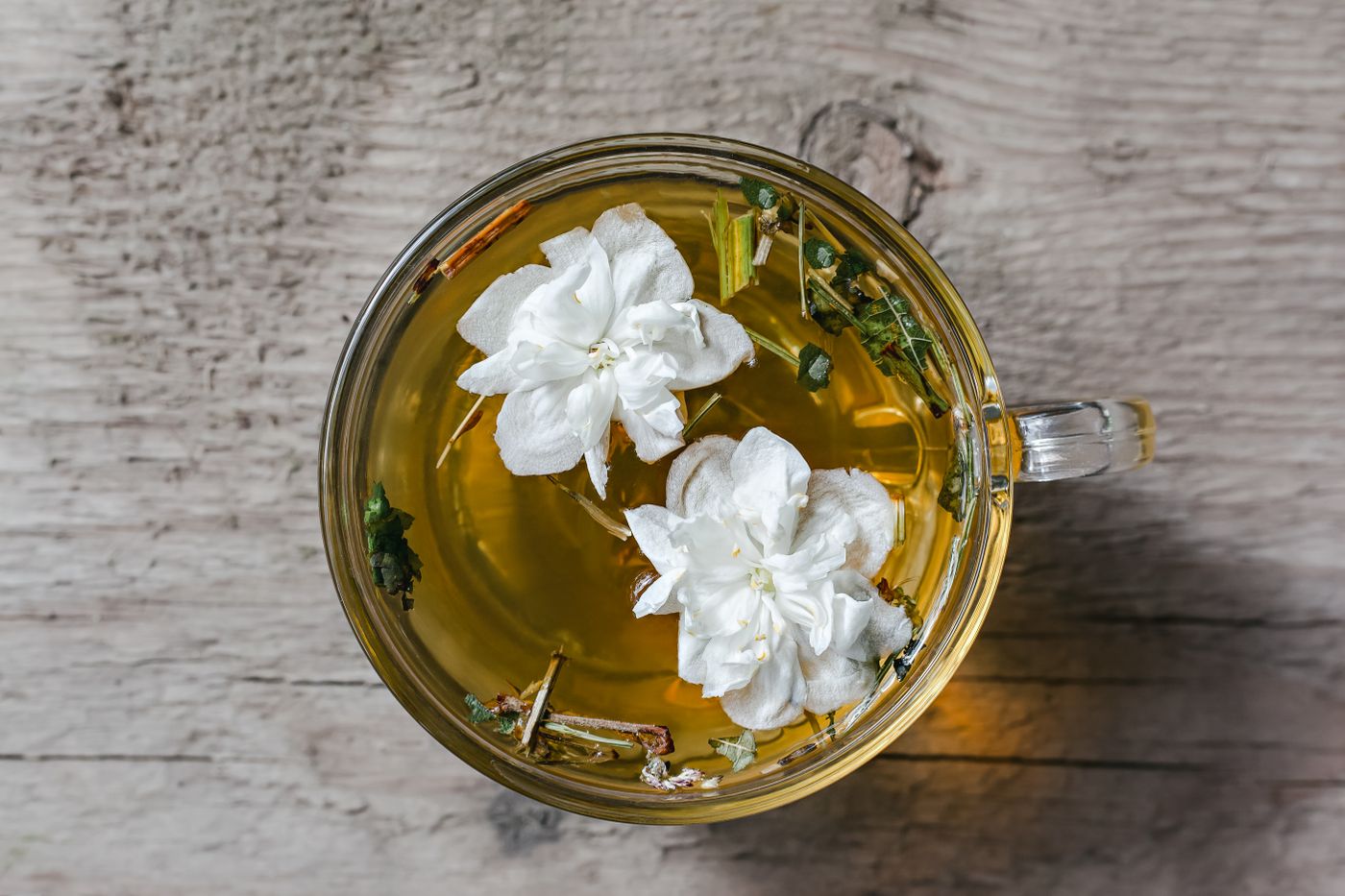
The taste, broken into parts
| Stage | What you should notice |
|---|---|
| Dry leaf | Sweet white flowers, a little dried hay, no chemical sharpness |
| Steam from the cup | The strongest floral moment. Honeysuckle and orange blossom are the usual comparisons |
| First sip | Light, softly sweet, floral lift rather than floral weight |
| Body | Clean and mild, with the green base showing as fresh grass or toasted chestnut |
| Finish | Sweet, no drying grip on the tongue when brewed correctly |
| Empty cup | Warm floral perfume that hangs around for a minute or two |
Chemists have measured what is doing the work. The compounds that keep showing up as the signature of jasmine tea are linalool and benzyl acetate, along with methyl anthranilate and indole, and their concentration climbs with each round of scenting, as documented in published work on the Chinese scenting process. Indole is the interesting one. On its own it smells frankly unpleasant, and in tiny amounts it is part of what makes real jasmine smell alive rather than flat.
Why cheap jasmine tea tastes like soap
This is the complaint I hear most, and it is usually not the drinker's fault. There are three causes, and they are easy to tell apart.
Artificial flavoring. A lot of cheap jasmine tea is ordinary green tea sprayed with jasmine flavoring. The aroma hits instantly, sits on the surface, and coats your mouth afterwards the way scented soap does. Real scenting builds the aroma into the leaf over days, so it unfolds instead of announcing itself.
Over-scenting a poor base. If the underlying tea is dull, more jasmine is the cheapest way to make it taste like something. The result is unbalanced, all perfume and no tea.
Boiling water. Even good jasmine turns soapy and bitter if you pour water straight off the boil onto it and walk away. The green base scorches, and the floral notes go sharp.
| Tell | Traditionally scented | Flavored or over-scented |
|---|---|---|
| Dried petals in the leaf | Few or none | Plenty, often added for looks |
| Aroma | Rounded, sweet, opens gradually | Sharp and immediate, like perfume |
| After a 3-minute steep | Still sweet and drinkable | Soapy, with a bitter edge |
| Second steep | Still floral, a little lighter | Aroma gone, plain green tea left |
| Label | Green tea, jasmine flowers | "Natural flavors", "jasmine flavoring" |
That second-steep test is the quickest one you can run at home. Scented tea holds its aroma into the second and third infusion because the aroma is in the leaf. Sprayed tea gives everything up at once.
How real jasmine tea gets its scent
Jasmine flowers are picked during the day while they are still closed, then kept cool until evening. They open after dark, and that is when they release their scent. So the scenting happens at night: the blossoms are layered through the dry tea leaves, left for hours while the leaves absorb the aroma, then sieved out. Then it is done again. And again. Better grades go through the cycle several times, with fresh flowers each round.
Our own jasmine tea comes from Guangxi, which along with Fujian is where most of China's serious jasmine work happens. The first time I sat in a scenting room at night I expected it to be pleasant. It is overwhelming. The smell is so dense it stops being pretty and becomes a physical thing you are standing inside, and the workers move through it as if it were nothing.

This is why the petals matter so little. In traditional scenting the spent flowers are removed, because by then they have given up everything they had and would only add a stewed, vegetal note. Petals left in the tin are mostly decoration. Aroma also fades with time in storage, which researchers have tracked across storage durations, so jasmine is one tea worth drinking young rather than saving.
Green, white or black: the base changes everything
Most jasmine tea uses a green base, which is why the default taste is fresh and light. Swap the base and the whole cup moves.
- Green base. Fresh, grassy or chestnut-sweet, the most common and the most recognizable. This is what people mean by jasmine tea.
- White base. Softer and rounder, with less grassiness. The floral note reads as honey rather than perfume.
- Black base. Rarer. Malty and richer underneath, and the jasmine has to fight for attention. Some people love it. I find the flower gets lost.
- Pearls versus loose leaf. Hand-rolled jasmine pearls are the same idea in a tighter package. They unfurl slowly and release the aroma over more steeps.
One thing the base does not change much is the caffeine, which lands in the normal range for the tea underneath rather than being lowered by the flowers. I went through the actual numbers in does jasmine tea have caffeine.
How to brew it so it stays sweet
Jasmine is not fussy, but it is heat-sensitive. Almost every bad cup I have been handed was brewed with water straight off the boil.
| Method | Leaf | Water | Temperature | Time |
|---|---|---|---|---|
| Mug and strainer | 2 to 3 g | 250 ml | 80C / 175F | 2 to 3 min |
| Gaiwan, gongfu style | 3 to 4 g | 100 ml | 85C / 185F | 15 to 25 s, add 5 s per steep |
| Grandpa style, tall glass | a pinch | 350 ml | 80C / 175F | drink and keep topping up |
| Cold brew | 8 to 10 g | 1 litre | cold, in the fridge | 6 to 8 hours |
If you have no thermometer, boil the kettle and wait about three minutes, or pour the water into a second vessel first. Both drop it into roughly the right range. The full method for any tea is in our guide to brewing loose leaf tea, and the weights are in the tea-to-water ratio cheat sheet.
Cold brewing is the most forgiving way to drink jasmine, and to my taste the most flattering. Cold water pulls the floral aromatics and very little of the bitterness, so you get the perfume without any risk of a harsh cup. Our instant cold-brew jasmine exists because I got tired of waiting eight hours for that.
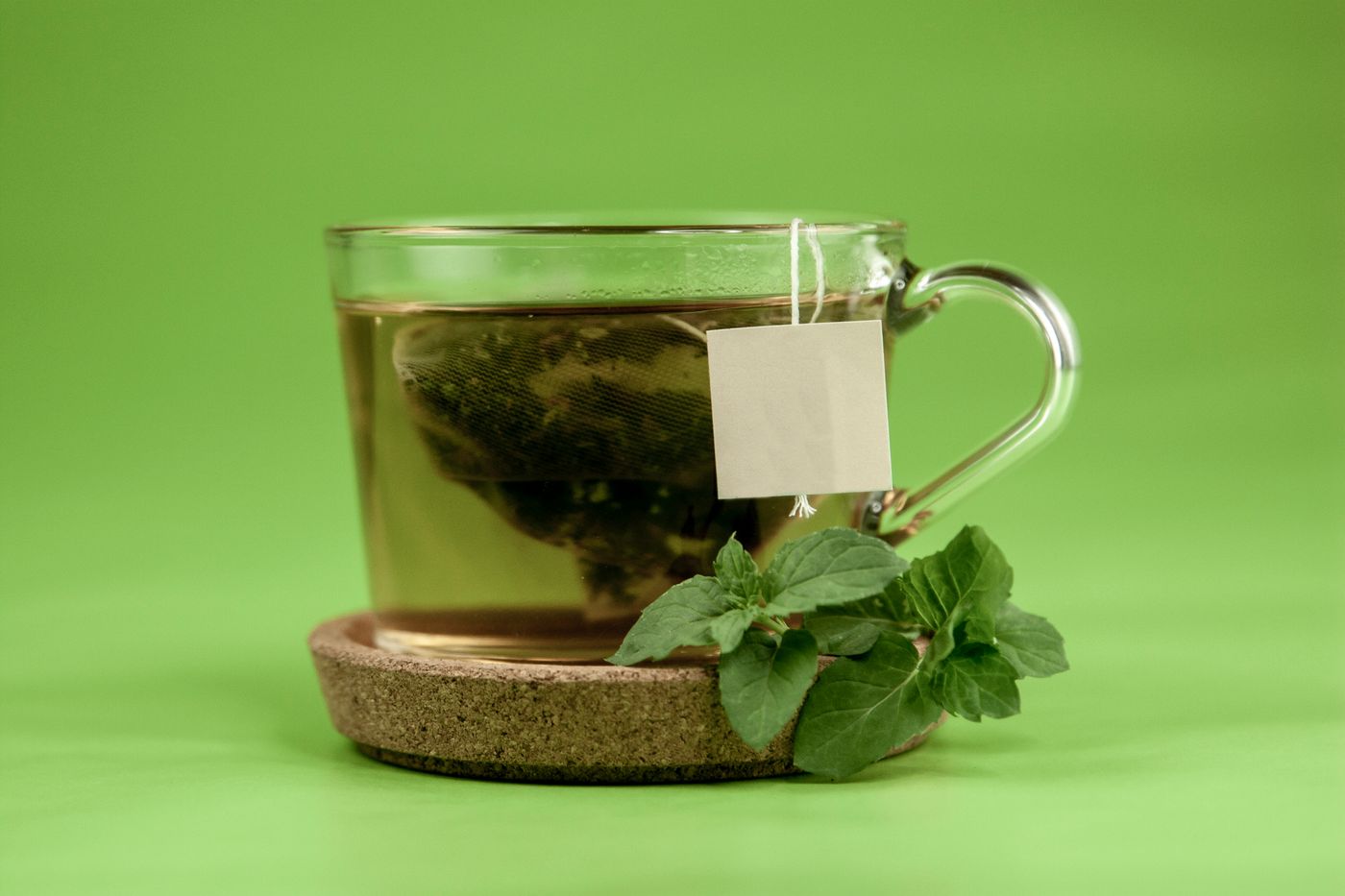
What to drink it with
Jasmine is a light tea with a loud aroma, so it works best where it can either cut through fat or sit quietly beside something delicate.
- Dim sum. The classic pairing, and the reason jasmine is the default pot in a Cantonese restaurant. It cuts oil and resets the palate between dishes.
- Steamed fish, rice dishes, anything mild. The tea adds aroma without adding weight.
- Fruit and light pastry. Peach, apricot and almond all sit well with the floral note.
- Not with strong cheese or heavy chocolate. The tea loses. Reach for a black tea instead.
FAQ
What does jasmine tea taste like?
Softly floral and naturally sweet, with a clean, light green tea body underneath and a slight grassy or chestnut note. The aroma is stronger than the flavor, and a well-made cup finishes sweet without any drying, astringent grip.
Why does my jasmine tea taste like soap?
Usually artificial jasmine flavoring sprayed onto a cheap base, which coats the mouth instead of blending in. Over-scenting and water that is too hot do the same thing. Try brewing at 80C (175F) for two minutes, and if it is still soapy, the tea is the problem.
Is jasmine tea sweet or bitter?
Naturally sweet when brewed properly, with no sugar needed. Bitterness in jasmine tea almost always comes from water that is too hot or a steep that ran too long, since the green base scorches easily. It should never be bitter straight out of the tin.
Should jasmine tea have flower petals in it?
Not necessarily, and often the opposite. In traditional scenting the spent blossoms are sieved out after they have given up their aroma. Visible petals are frequently decorative. Judge by the smell of the dry leaf and how long the aroma lasts across steeps.
Does jasmine tea taste like green tea?
It tastes like green tea wearing a floral top note. Most jasmine tea uses a green base, so the grassy, fresh character is still there underneath. If you dislike green tea entirely, jasmine softens it but will not hide it.
If you want to taste the difference between scented and flavored for yourself, start with our Chinese jasmine tea and run the second-steep test on it.