

Jasmine green tea is green tea that has been scented with fresh jasmine blossoms, not flavoured with jasmine oil or extract. Blossoms picked that afternoon are layered with dry tea overnight, the leaf absorbs the aroma, the spent flowers are sifted out, and the whole thing repeats. Good jasmine green tea has no visible flowers in it at all.
The short version
- It's a scented tea, not a flavoured one. The base is nearly always green tea; the jasmine is added by contact, not by spraying.
- Quality tracks the number of scenting rounds. Cheap jasmine gets one or two. Good jasmine gets five or more.
- Dried petals in the bag are a warning sign, not a feature. Real producers take the flowers back out.
- Brew at about 80°C / 175°F for two to three minutes. Boiling water is what makes jasmine tea taste bitter and soapy.
- Most Chinese jasmine tea comes from Guangxi today, though Fuzhou in Fujian is where the tradition was built.
In this post
What jasmine green tea actually is
Two ingredients. Green tea, and the smell of jasmine flowers.
That second part is the one people get wrong. Jasmine green tea is not green tea with flowers mixed into it, and it is not green tea sprayed with jasmine flavouring. It is green tea made to absorb the scent of living blossoms by sitting next to them, in the dark, for hours. Tea leaf is unusually good at this — dry, porous, and quick to pick up whatever is in the air around it. It's the same property that ruins tea stored next to coffee.
The base is nearly always a plain, slightly sweet green tea. Some producers scent white or black tea the same way, and those are worth trying, but if a label just says "jasmine tea", assume green.
What comes out is soft and sweet, with the floral note sitting behind the tea rather than on top of it. I've written a full breakdown of what jasmine tea tastes like and why some of it tastes like soap. This post is about how it's made and how to buy it well.
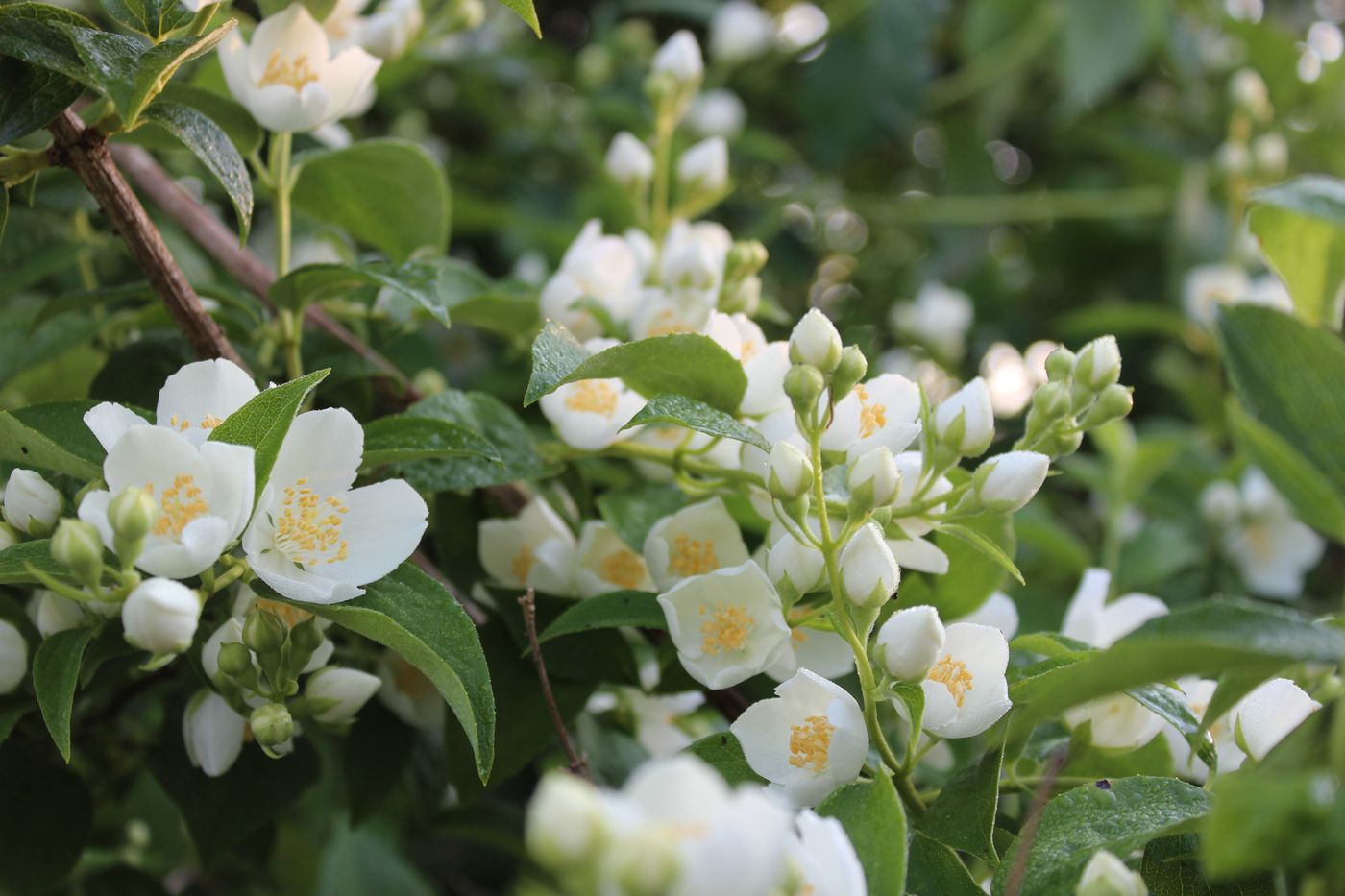
How the jasmine gets into the tea
The process is called scenting, and in Chinese the rounds are counted as yin. It runs on the flower's schedule, not the factory's.
Jasmine buds are picked during the day, while they're still closed and green-white and haven't released anything yet. They sit in shallow piles through the afternoon. Then, usually somewhere around dusk, they start to open — and that's when they give off almost everything they have. The workshop waits for this. The flowers are spread in layers with dry tea leaf, and the two sit together overnight while the tea drinks in the aroma.
In the morning the spent flowers are separated out and the tea, now slightly damp from the fresh blossoms, is dried again. Then it's done a second time with fresh flowers. Then a third. Each pass adds depth and costs another night's flowers.
I've stood in one of these workshops in August at the hour the flowers open, and it is not a subtle experience. The smell arrives all at once and fills the building, greener and sweeter than anything sold as "jasmine" scent in a shop. Everyone works fast, because the window is short and the flowers don't wait. Then the doors close on it overnight. That smell is what you're actually paying for, and it's why I've never managed to take jasmine-flavoured tea seriously.
Analytical work on the process backs up what producers have always claimed about repetition mattering: researchers tracking aroma compounds through multiple rounds of jasmine scenting have found the volatile profile continuing to build and shift across successive rounds rather than saturating after the first.
Jasmine is not the only flower this is done with. The same layering, sifting and re-drying is how osmanthus tea is made, using autumn's gui hua blossom instead — a warmer apricot-and-honey aroma where jasmine is cool and green.
There's no legal grading standard here, so treat the table below as the rough convention rather than a rulebook. Producers count differently and some inflate.
| Scenting rounds | Roughly what it means | What you notice in the cup |
|---|---|---|
| 1–2 | Everyday supermarket grade | Perfume sits on the surface and is gone by the second steep |
| 3–5 | Solid daily-drinking tea | Clear jasmine, and the tea underneath still tastes like tea |
| 6–7 | Premium | Aroma survives three or more steeps; sweetness lingers in the finish |
| 8–9+ | Competition grade, rarely exported | Jasmine and tea stop being two separate things |
This is the honest reason two jasmine teas can sit on the same shelf and be nothing alike. You aren't really buying leaf. You're buying how many nights of flowers went into it.
Why good jasmine tea has no flowers in it
This is the single most useful thing I can tell you about buying jasmine tea, and it's the opposite of what most people assume.
The flowers are supposed to come out. Once a blossom has given up its aroma it's spent — it contributes nothing but bulk, and left in the tea it will go stale and eventually taste papery. Traditional workshops sift and winnow the flowers away after each round, and the finished tea is just leaf.
So when you open a tin of good jasmine green tea, you should see rolled or twisted green leaf and almost nothing else. Maybe a stray petal or two that escaped the sorting. Not a scattering of white confetti.
The obvious question: why does so much jasmine tea on the shelf have visible dried petals in it, then?
Two reasons, and neither is quality. Dried flowers look like the thing you're buying and they photograph beautifully, so they get added back as a visual cue. The second reason is worse: if the base tea has been through one scenting round and doesn't smell of much, petals plus a little added jasmine flavouring can carry the illusion. Flowers as decoration are harmless. Flowers standing in for scenting are the whole problem.

Guangxi, Fuzhou, and where your jasmine comes from
Fuzhou, in Fujian province, is where jasmine tea became a craft. The city has been scenting tea for centuries and the technique that spread across China is essentially Fuzhou's. If you see "Fuzhou jasmine" on a label, that's the heritage claim.
But the volume story moved. Most Chinese jasmine tea today is made in Guangxi, in the south, where the climate suits jasmine cultivation and the flower farms are enormous. Our own jasmine tea comes from Guangxi for exactly that reason: it's where the good flowers are, at a scale that keeps it affordable without cutting scenting rounds.
I'll be blunt about the marketing here, because it cuts against a story we could easily tell. Fujian origin is not automatically better jasmine. The province matters far less than how many nights of flowers the producer paid for. A five-round Guangxi tea beats a two-round Fuzhou tea every time, and the label will rarely tell you which is which.
My family is from Fujian, and I still think this is true.
How to tell good jasmine green tea from bad
Before the water goes in, four checks:
- Look at the dry leaf. Whole, twisted, green-to-grey leaf. Lots of dust and broken fragments means low-grade base tea, which no amount of scenting rescues.
- Count the flowers. Near zero is the target, as above.
- Smell the dry tea. Real scenting smells sweet, green and slightly creamy — close to the living flower. Added flavouring smells sharper, more like soap or hand cream, and it hits you from further away.
- Ask for the harvest year. Jasmine green tea is best young. The green base fades and the aroma with it. A seller who can't tell you the year is telling you something.
Then brew it and check one more thing: does the jasmine last? Cheap jasmine gives you everything in the first cup and nothing after. A well-scented tea will still be floral on the third steep.
There's one more test that costs nothing. Let the tea go cold and taste it. Scented tea stays sweet when cold. Flavoured tea usually turns bitter and vaguely chemical, because whatever was sprayed on has nowhere to hide once the heat is gone.
How to brew it without ruining it
Jasmine green tea is a green tea, and green tea has a temperature ceiling. Boiling water scalds the leaf, pulls out too much tannin at once, and turns that soft floral note into something harsh. Most bad cups of jasmine tea are just overheated cups of jasmine tea.
Let the kettle sit for three or four minutes off the boil, or pour a splash of cold water in first. You're aiming for roughly 80°C / 175°F.
| Method | Leaf | Water | Temp | Time | Resteeps |
|---|---|---|---|---|---|
| Mug and strainer | 3 g (~1.5 tsp) | 250 ml / 8 oz | 80°C / 175°F | 2–3 min | 1–2 |
| Tall glass, grandpa style | 3 g | 300 ml / 10 oz | 80°C / 175°F | Sip and top up | All morning |
| Gaiwan, gongfu style | 4 g | 120 ml / 4 oz | 85°C / 185°F | 20 s, +10 s per steep | 4–6 |
| Cold brew | 5 g | 1 L / 34 oz | Fridge cold | 6–8 hrs | 1 |
The grandpa method — leaves loose in a tall glass, hot water topped up as you drink — is how most people in China actually drink jasmine tea. It works because jasmine's base is a forgiving green. The leaves sink after a minute or two and you drink around them.
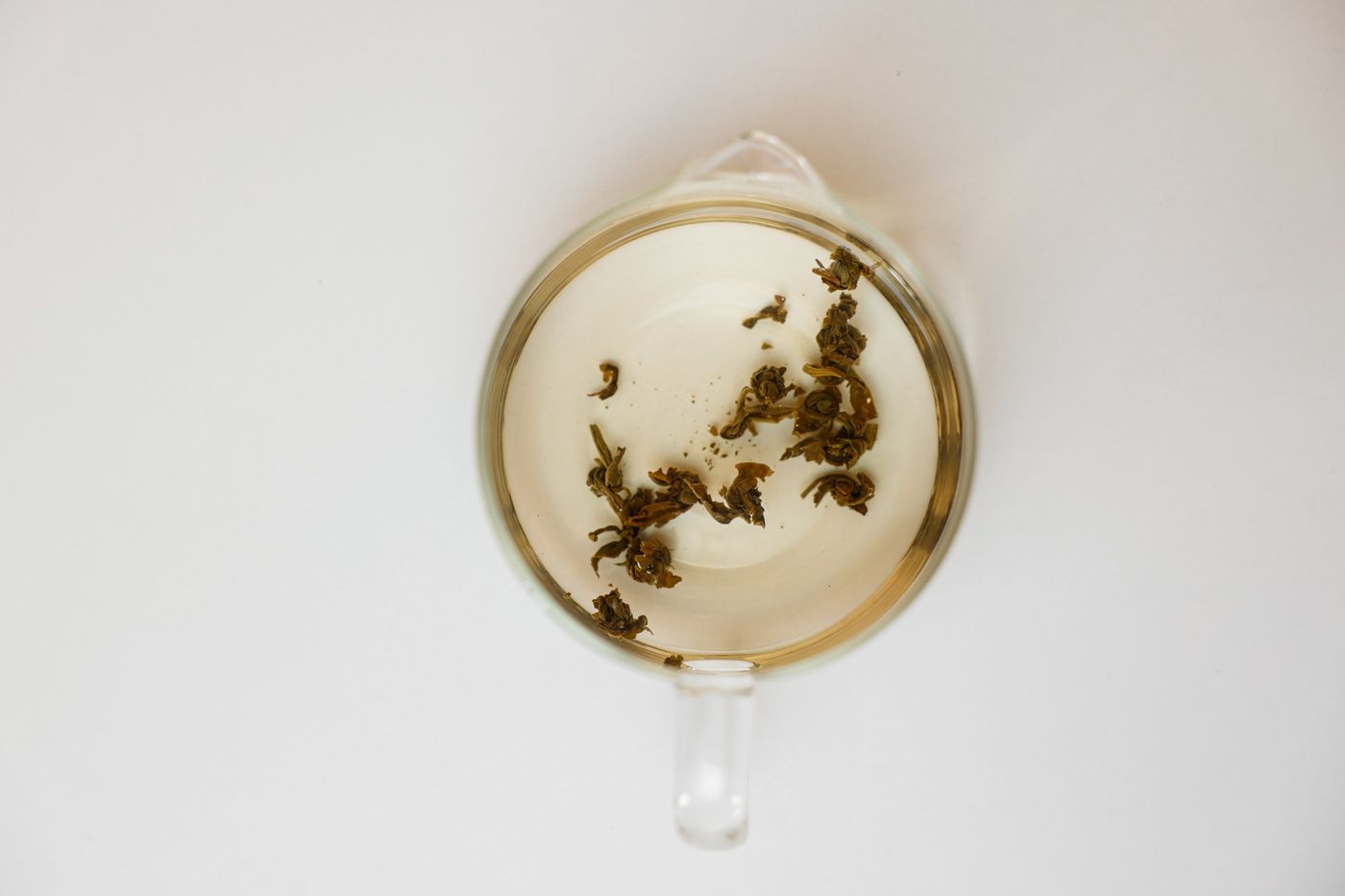
On caffeine: jasmine green tea has some, because green tea has some. The amount lands in the usual green tea range and depends more on how much leaf you use and how hot the water is than on the jasmine. There's a fuller answer in does jasmine tea have caffeine, including how it compares to coffee.
Jasmine iced and cold-brewed
Jasmine is the tea I'd point almost anyone to for cold brewing. Cold water pulls out the aromatics and the sweetness while leaving most of the bitterness in the leaf, and jasmine's whole appeal is aromatic. It comes out tasting like a flower garden and costs you nothing but patience.
Five grams to a litre, into the fridge, six to eight hours, strain. That's it. No sugar. If you're in a hurry, our instant cold-brew jasmine is the same tea in a sachet you can refill straight in a bottle.
What I'd avoid is pouring hot jasmine tea over ice and calling it iced tea. It works, but you lose the top notes to the steam and dilution flattens the rest. Brew it double strength if you're going to do it that way.
FAQ
Is jasmine green tea the same as jasmine tea?
Usually, yes. "Jasmine tea" almost always means a green tea base scented with jasmine, so the two terms get used interchangeably. Jasmine can also be scented onto white or black tea, but those are normally labelled specifically, such as jasmine silver needle.
Does jasmine green tea have caffeine?
Yes. The jasmine itself contributes none, but the green tea base does, landing in the typical green tea range. Your cup depends mostly on leaf quantity, water temperature and steeping time. Cooler water and shorter steeps give you less.
Should there be flowers in my jasmine tea?
No, and their absence is a good sign. Spent blossoms are sifted out after scenting because they add nothing once the aroma has transferred. Visible dried petals are usually decoration, and occasionally cover for a tea that was barely scented at all.
Why does my jasmine tea taste bitter?
Almost always water that was too hot, or a steep that ran too long. Green tea bases turn harsh above roughly 85°C. Drop to 80°C, cut the time to two minutes, and use slightly less leaf. If it still tastes soapy, the tea was flavoured rather than scented.
Can you cold brew jasmine green tea?
It's one of the best teas for it. Use about five grams of leaf per litre of cold water, refrigerate six to eight hours, then strain. Cold water extracts the floral aroma and sweetness while leaving most of the bitterness behind.