

Biluochun is a Chinese green tea from the Dongting hills beside Lake Tai, famous for tightly curled, downy leaves and a fruity, floral aroma. The scent is real, not added. The tea bushes grow among fruit trees, and the leaves pick up the orchard. Brew it cooler than you think, around 75 to 80°C.
The short version
- Biluochun ("green snail spring") is one of China's most famous green teas, from Jiangsu.
- The fruity smell comes from fruit trees planted among the tea, not from any flavoring.
- The leaves are rolled into tight curls and covered in fine white down.
- Brew it gently: cooler water at 75 to 80°C and a short steep keep it sweet, not bitter.
- Good Biluochun has no dried petals or fruit in it. The aroma should come from the leaf alone.
In this post
What is Biluochun?
Biluochun is a green tea from the East and West Dongting hills beside Lake Tai, in Jiangsu province. The name means, roughly, "green snail spring." Bi is the jade-green color, luo is the snail, because the leaves curl into a tight little spiral, and chun is spring, when the best leaves are picked. It is one of China's most famous green teas, and it has been made in this spot for a very long time.
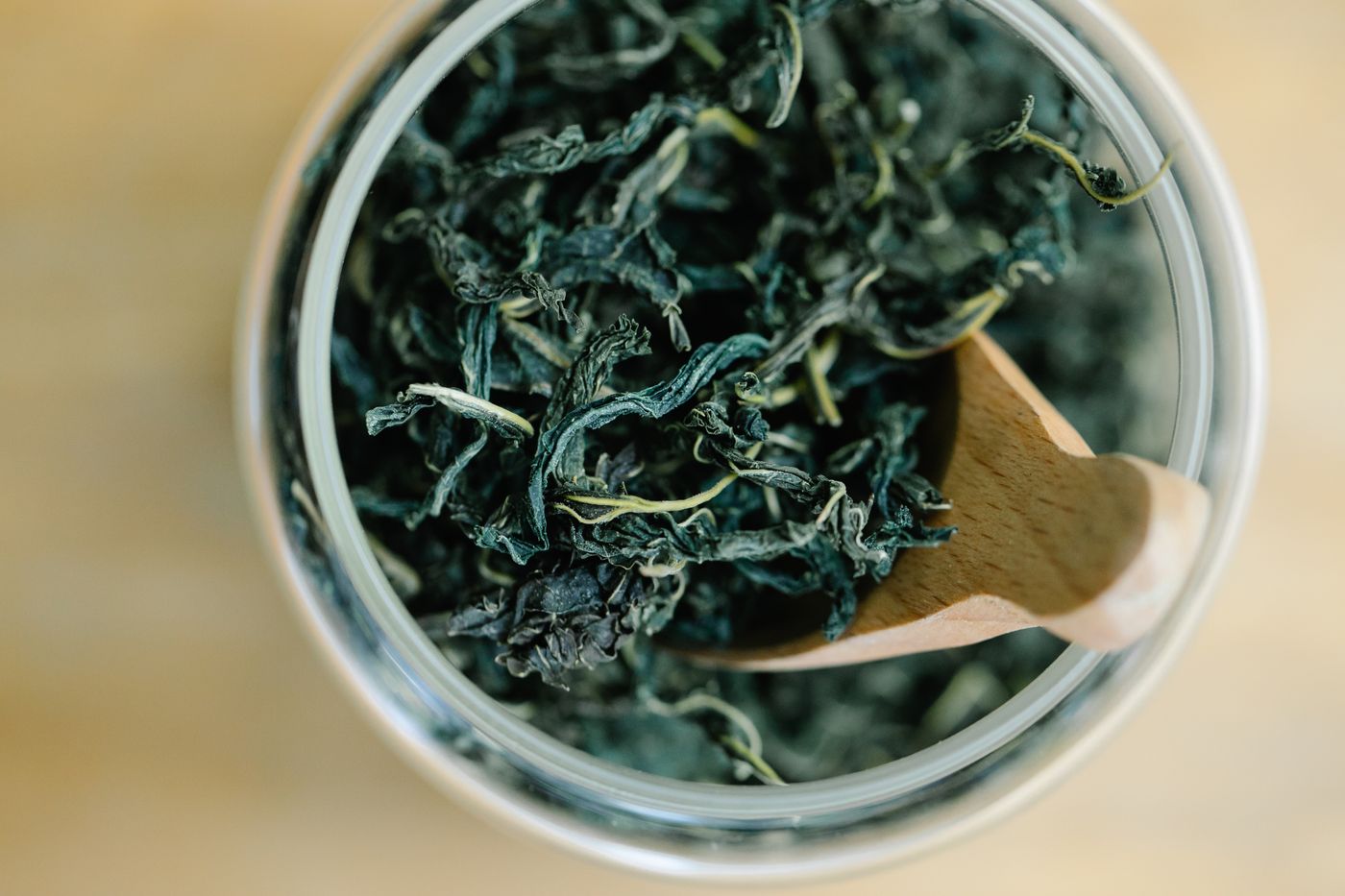
Pick up a handful and the first thing you notice is the fuzz. Good Biluochun is covered in fine white hairs, the downy tips of very young leaves and buds. That down is part of why the brew comes out soft and a little sweet.
Why it smells like fruit and flowers
This is the part that makes Biluochun special, and it is not marketing. In its home region the tea bushes are interplanted with fruit trees: peach, plum, apricot, loquat, citrus. The tea and the fruit grow together, flower around the same time, and the tea leaves quietly take on that orchard character while they are still on the branch.
The first time someone handed me a jar of proper Biluochun, I thought they had slipped something into it. There is an apricot-and-flower note that seems too fruity to be plain green tea. It is not flavored. That smell is the whole point of the tea, and it is the reason I keep it around for anyone who tells me green tea is boring.
What Biluochun tastes like
Lighter and more delicate than Longjing, with less of the toasty, chestnut side and more of a fresh, fruity-floral lift. There is a gentle sweetness, a clean green body, and very little bitterness if you brew it kindly. The down gives the liquor a slightly soft, almost silky feel.

It is a spring tea in every sense: bright, aromatic, not heavy. If Longjing is the reassuring green tea, Biluochun is the one that surprises people.
The name story
The story usually told is that local people had a blunter name for this tea long before it was polished up. Because the aroma was so strong, they called it something close to "scary fragrance." When the Kangxi Emperor passed through and tasted it, the story goes, he liked the tea but not the name, and renamed it Biluochun for the jade-green, snail-curled spring leaves.
It is folklore, so take the details lightly. But it captures something true: the smell of this tea really is the first thing that gets you.
Biluochun vs Longjing
These are the two green teas people most often compare, so here they are side by side.
| Biluochun | Longjing (Dragon Well) | |
|---|---|---|
| Origin | Dongting, Lake Tai (Jiangsu) | West Lake, Hangzhou (Zhejiang) |
| Leaf shape | Tight curled "snails," downy | Flat, pressed spears |
| Aroma | Fruity, floral | Toasty, chestnut |
| Taste | Delicate, sweet, fresh | Nutty, mellow, savory-sweet |
| Brew temp | 75 to 80°C | around 80°C |
| Best for | People who find green tea plain | People who think green tea is grassy |
Neither is better. Longjing is the calmer, nuttier cup, and Biluochun is the aromatic, fruity one. If you like green tea, you should know both. My honest ranking of Chinese teas puts them together for a reason.
How to brew Biluochun
The one rule: do not scald it. This is a delicate, downy tea, and boiling water turns it bitter and flat. Cooler water and a short steep keep the sweetness and the aroma.
| Method | Leaf | Water | Temp | Time |
|---|---|---|---|---|
| Glass (classic) | ~3 g | 200 ml | 75 to 80°C | 2 to 3 min |
| Mug + strainer | ~3 g | 250 ml | 80°C | 2 min |
| Gongfu (gaiwan) | 4 to 5 g | 100 ml | 80°C | 15 to 25 s, add time each round |
| Cold brew | 5 g | 500 ml | fridge | 6 to 8 hours |
A glass is the classic way to brew Biluochun, because the curled leaves sink and slowly open as they soak, and it is genuinely nice to watch. Drop the leaves in, add the water, and drink before it goes cold. You can get two or three steeps out of good leaves.
How to spot good Biluochun
Three quick tells. First, the down: real Biluochun is covered in fine white hairs, and the dry leaves look almost frosted. Second, the curl: leaves should be small, tight spirals, not loose or broken. Third, and most important, there should be no dried flowers or fruit in the tin. The fruity aroma comes from how the tea is grown, so if someone has added petals to fake it, that tells you the leaf underneath cannot do it alone.
One more, if you can check it: freshness. Because it is so young and downy, Biluochun fades faster than sturdier teas, so buy it in smaller amounts and drink it within the year. You can read more about greens in general in our complete guide to green tea.
FAQ
Is Biluochun a green tea?
Yes. Biluochun is one of China's classic green teas, meaning the fresh leaves are heated early to stop oxidation, then rolled into their signature curls. That is why it keeps a fresh, green character rather than the malty notes of a black tea like Dianhong.
Why does Biluochun smell fruity?
Because of how it is grown. In its home region the tea bushes are planted among fruit trees such as peach, plum, apricot, and loquat. The leaves absorb that orchard aroma on the branch, so the fruity-floral scent is natural, not added flavoring.
What temperature should I brew Biluochun at?
Around 75 to 80°C, cooler than boiling. It is a delicate, downy tea, and water straight off the boil scorches it and turns it bitter. Use a short steep of two to three minutes, and you will get a sweet, aromatic cup.
Does Biluochun have caffeine?
Yes, some. Like most green teas it is generally on the lower side, and usually less than a cup of coffee, though the exact amount depends on the leaves and how you brew. See the Mayo Clinic caffeine chart for rough ranges.
Biluochun or Longjing, which is better?
Neither, honestly. Longjing is flatter-leaved, nutty, and chestnut-sweet. Biluochun is curly, downy, and fruity-floral. Pick by mood: reach for Longjing when you want something mellow, and Biluochun when you want aroma. Most green-tea drinkers end up keeping both.
If you want to taste the orchard for yourself, our Biluochun is picked in spring and sealed in small batches so it reaches you while it is still fresh.