

There is no honest ranking of loose leaf tea brands, because whoever wrote it is almost always selling one of them. I sell tea. So instead of a list, here are the eight checks I use myself: named origin, stated harvest, published lab testing, price per gram, leaf condition, packing date, range, and whether anyone answers your questions.
The short version
- Rank the criteria, not the brands. Anyone ranking brands has a stake in the outcome, including me.
- A named region beats a named country. "Chinese green tea" is not an origin.
- Lab results for pesticides and heavy metals should be published or sent on request, not just claimed in a bullet point.
- Compare price per gram, never price per tin. Package sizes are chosen to make that comparison awkward.
- BornTea passes some of these checks and fails others. Both are spelled out, along with four categories where you should buy from somebody else.
In this post
Why I'm not ranking brands
Search for the best loose leaf tea brands and you will find a lot of numbered lists. Read the small print on most of them and you will find affiliate arrangements, or a shop ranking itself first, or a writer who has never met a tea farm. I could add another one to the pile and put BornTea at the top, and you would be right to ignore it.
A checklist is more useful anyway. Brands change hands, buyers leave, a good range goes downhill in a season and a mediocre one gets sharp new sourcing. The criteria do not move. Learn them once and you can judge any seller, including this one, for the rest of your life.

The reason I care about this at all is a shop in Hong Kong, years ago, where I picked up a handsome tin of green tea and asked the man behind the counter where it came from. He said China. I asked which province. He shrugged, in a friendly way, and said it was good tea. He may well have been right. But nobody in that chain, from the tin backwards, could have told me, and once you notice that gap you cannot stop noticing it. Most of what is wrong with tea retail sits in that shrug.
The eight checks that separate good loose leaf from bad
| Check | What good looks like | Warning sign |
|---|---|---|
| 1. Origin | Province and growing area named: Anxi in Fujian, Dong Ting at Tai Hu in Jiangsu | "Product of China", or no origin at all |
| 2. Harvest window | A season and a year, and for greens a month | "Fresh" or "new season" with no date attached |
| 3. Lab testing | Third-party results for pesticides and heavy metals, published or sent when asked | "Pesticide free" as a bullet point with nothing behind it |
| 4. Price per gram | Weight in grams printed plainly, easy to divide | Weight buried in the small print, or odd sizes that resist comparison |
| 5. Leaf condition | Whole or nearly whole leaf, consistent colour, little dust at the bottom | Fragments and powder sold as loose leaf at loose leaf prices |
| 6. Packing date | A packed date or lot code on the pouch itself | A best-before three years out and nothing else |
| 7. Range | Focused enough that the seller can talk about every item on it | Hundreds of listings spanning every category on earth |
| 8. Answers | Ask where a tea comes from; get a specific answer within a day or two | Copy-pasted marketing text, or no reply |
Check three is the one worth pressing on. Tea is a leaf that gets dried, not washed, and everything applied to it in the field stays with it. Plenty of sellers write "pesticide free" on a page. Far fewer can tell you which laboratory tested which batch and for what. You do not need a chemistry degree to ask, and the quality of the answer tells you almost everything about how the tea was bought.
The last one is the cheapest test and the most revealing. Send an email asking where a specific tea is grown and when it was picked. A seller with a real supply chain answers in a sentence. A seller who bought a pallet from a broker cannot answer at all, and the reply will show it.
Price per gram, not price per tin
Tea is sold in package sizes chosen to make comparison hard: ounces here, grams there, tins that look generous and hold very little. The fix takes ten seconds. Convert everything to grams, divide, and compare that number instead.
| Package as sold | Grams | Divide the price by | Mugs at ~3 g |
|---|---|---|---|
| 25 g sample | 25 | 25 | about 8 |
| 2 oz tin | 57 | 57 | about 19 |
| 3.5 oz pouch | 99 | 99 | about 33 |
| 100 g pouch | 100 | 100 | about 33 |
| 4 oz tin | 113 | 113 | about 37 |
| 20 sachets at 2 g | 40 | 40 | 20, one per sachet |
| 250 g bulk bag | 250 | 250 | about 83 |
One ounce is 28.35 grams, which is where most of the confusion comes from. A tin that reads "4 oz" sounds twice the size of a 100 g pouch and holds barely more.
Two things fall out of doing this. Sachets and bags usually look cheap per unit and stop looking cheap per gram, because two grams of broken leaf is not a lot of tea. And good loose leaf usually costs less per cup than people expect, because you can steep a decent Chinese tea several times and the gram figure is spread across all of them. The number on the price tag is not comparable across sellers. The number you calculate is.
What the leaf itself tells you
Before you brew anything, look at it dry, and then look at it again wet. The wet leaf is the honest one; it is very hard to disguise.
Whole leaf, broken leaf, fannings and dust are formal tea grades, and the small grades are what fill most tea bags. They are not defective, they are just fast-extracting and one-dimensional. The problem is broken grades sold in a pouch, at loose leaf prices, with a photograph of whole leaf on the label.
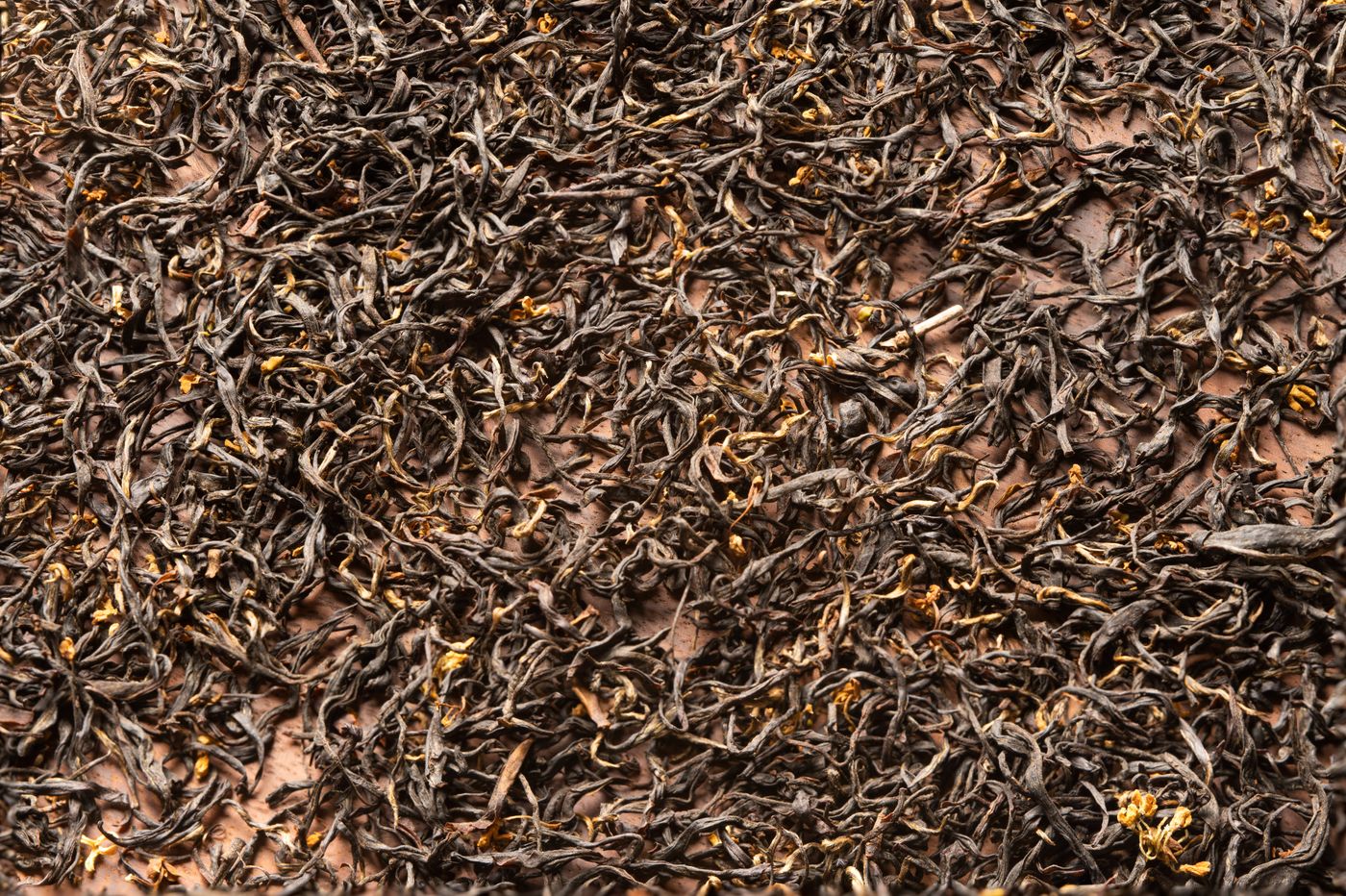
- Dry leaf: pieces of a consistent size and colour, few loose fragments, and almost no powder collecting at the bottom of the bag.
- Smell: distinctly something. Faded tea smells of paper and dust more than of tea, and no brewing technique brings it back.
- Wet leaf: tip the spent leaves onto a plate. Good tea unfurls into recognisable leaves, sometimes with a whole bud and two leaves still joined. Confetti means low-grade material or rough handling.
- Colour of the wet leaf: even, and appropriate to the type. A uniform dead brown in an oolong usually means a heavy roast covering something.
None of this requires expertise. It requires looking, which most people skip because the tin is already open and the kettle is already on.
Types of tea seller, honestly compared
Each of these is genuinely the right answer for somebody. Including the ones that are not us.
| Type of seller | What they're good at | The honest downside |
|---|---|---|
| Supermarket | Cheapest per cup, available everywhere, tastes the same every year | Bought on volume and blended for consistency; origin rarely stated below country level |
| Large tea chain | Huge range, gift-ready packaging, physical shops, easy returns | Flavoured blends dominate; single origins are a small slice; harvest dates seldom given |
| Specialty importer | Real expertise, broad single-origin range, often publishes origin and harvest | Several hands between farm and you, and the price carries all of them |
| Farm-direct seller (us) | Shortest chain, origin known first-hand, testing controlled, leaf is fresher | Narrow range, no shop to walk into, no tasting before you buy, one person's palate |
| Open marketplaces | Everything exists somewhere and it is usually cheap | Provenance is hard to verify, listings change hands, and often nobody is there to ask |
If you want to walk in, smell six teas and buy the one you liked, a good physical shop beats every website including mine. That is a real advantage and I cannot match it.
Where BornTea passes, and where it doesn't
Running our own checklist over our own shop, plainly.
What we do. Every tea is sourced in person, from farmers across China's tea provinces, with no broker in between. Product pages name the province and, where the name means something, the growing area: Anxi in Fujian for the Tie Guan Yin, Dong Ting at Tai Hu in Jiangsu for the Biluochun, Yunnan for the Dianhong and the Moonlight White. Every batch goes through Triple Toxin Screening at independent third-party laboratories for pesticides and heavy metals before it ships. Weights are printed in grams as well as ounces, so check four is easy to run on us. Packaging is corn fibre and cornstarch rather than plastic. And I answer the email myself, usually the same day.

Where we fall short. We do not publish the lab reports as downloadable documents, so on check three you are either taking my word for it or writing to ask, and "ask us" is a weaker answer than "here is the certificate". Our harvest information is stated as a season rather than a precise picking window, and keeping that current on every page is something we have not always done well. Most teas come in one size, which means you commit to a full pouch before you have tasted anything. The range is deliberately narrow and every tea in it was chosen by one person, so if your palate runs differently from mine, our shop will read as thin rather than curated. And there is nowhere to walk in and taste.
Those are structural, not excuses. A narrow farm-direct range is the trade you make for a short supply chain, and I would rather write it down than have you find out after buying.
Four things you should buy from somebody else
We are a Chinese tea shop, which by definition leaves a lot out. If you want any of the following, a specialist will serve you better and I would rather say so.
- Japanese green tea. Sencha and gyokuro are steamed rather than pan-fired, with a different flavour logic and a completely different supply chain. Buy from someone who works with Japanese growers.
- Matcha. It is a stone-ground powder with its own grades, and freshness matters even more than with leaf. That is a specialist purchase, and we are not the specialist.
- Herbal and rooibos infusions. Chamomile, peppermint and rooibos are not tea at all: none of them come from Camellia sinensis. Different plants, different growers, different expertise.
- Indian and Sri Lankan black tea. A first-flush Darjeeling or a proper Assam is worth having, and it needs a buyer with relationships in those regions rather than in Yunnan.
What we are good at is Chinese tea, bought directly, in a range small enough that I can tell you where every item came from. If that is what you want, the full range is here, and you can put together a spread across several loose leaf types if you would rather taste around before committing to one. If you want a steer on which to start with, our guide to the best Chinese teas and who each one suits is more use than any brand ranking.
FAQ
What should I look for in a loose leaf tea brand?
A named growing region rather than just a country, a stated harvest season, third-party lab testing for pesticides and heavy metals, weights in grams so you can compare price per gram, whole leaf rather than fragments, and a seller who answers a specific question about the farm.
How do you compare loose leaf tea prices?
Convert every package to grams and divide the price by that number. One ounce is 28.35 grams, so a 4 oz tin holds about 113 grams. Price per gram is comparable across every seller; the price on the label is not, because package sizes vary deliberately.
Is organic loose leaf tea worth it?
Certification is one signal, not the only one. It confirms a growing method, but says nothing about leaf grade, freshness or heavy metals from soil and air. Batch testing by an independent laboratory tells you more about what is actually in your cup than a certificate on the box.
Is loose leaf tea better than tea bags?
Usually, because bags are filled with fannings and dust while loose leaf is whole or nearly whole. Whole leaf extracts more slowly, tastes more complex and resteeps several times. Bags win on convenience and on price per bag, though rarely on price per gram.
Does loose leaf tea go bad?
It fades rather than spoils. Green teas lose their character fastest, often within a year, while pu-erh and some whites change slowly and improve. Look for a packing date, keep tea airtight and away from light, heat and strong smells, and buy amounts you will finish.