

Updated August 2026
The real benefits of drinking Chinese tea are simple and honest: it is a calorie-free, hydrating drink rich in natural plant compounds called polyphenols, with a gentle caffeine lift softened by an amino acid called L-theanine. Below are the everyday benefits worth knowing, the five main types of Chinese tea, and a straight answer on whether Chinese tea is actually good for you.
The short version
- Chinese tea is a plain, calorie-free drink. Most of its appeal is everyday, not medical.
- It is rich in polyphenols and antioxidants, the plant compounds behind tea's reputation.
- Its caffeine comes paired with L-theanine, which many people find gives calmer energy than coffee.
- The five main types are white, green, oolong, black, and post-fermented (pu-erh).
- Tea is a drink, not a medicine. For any health decision, talk to your doctor.
In this post
In China, tea is mostly a cultural thing. People drink it throughout the day, and it counts as one of the seven daily necessities of life, alongside firewood, rice, oil, salt, sauce, and vinegar. The tradition is old. It is usually traced, at least in legend, to the emperor Shen Nong nearly five thousand years ago.
The five types of Chinese tea
All true tea comes from one plant, Camellia sinensis. What makes white, green, oolong, black, and pu-erh taste so different is how the leaf is processed after it is picked.
- White tea is made from young leaves and buds with minimal processing. It is prized for a delicate, honeyed flavour and a gentle character.
- Green tea is heat-fixed early, which stops oxidation and preserves its fresh, green character.
- Oolong tea is partially oxidised. The flavour range runs from floral and creamy to dark and toasty.
- Black tea is fully oxidised, which is why the leaves are dark and the cup is richer and maltier.
- Post-fermented tea (such as pu-erh) is aged through a process that exposes the leaves to humidity and time, giving a deep, earthy character.
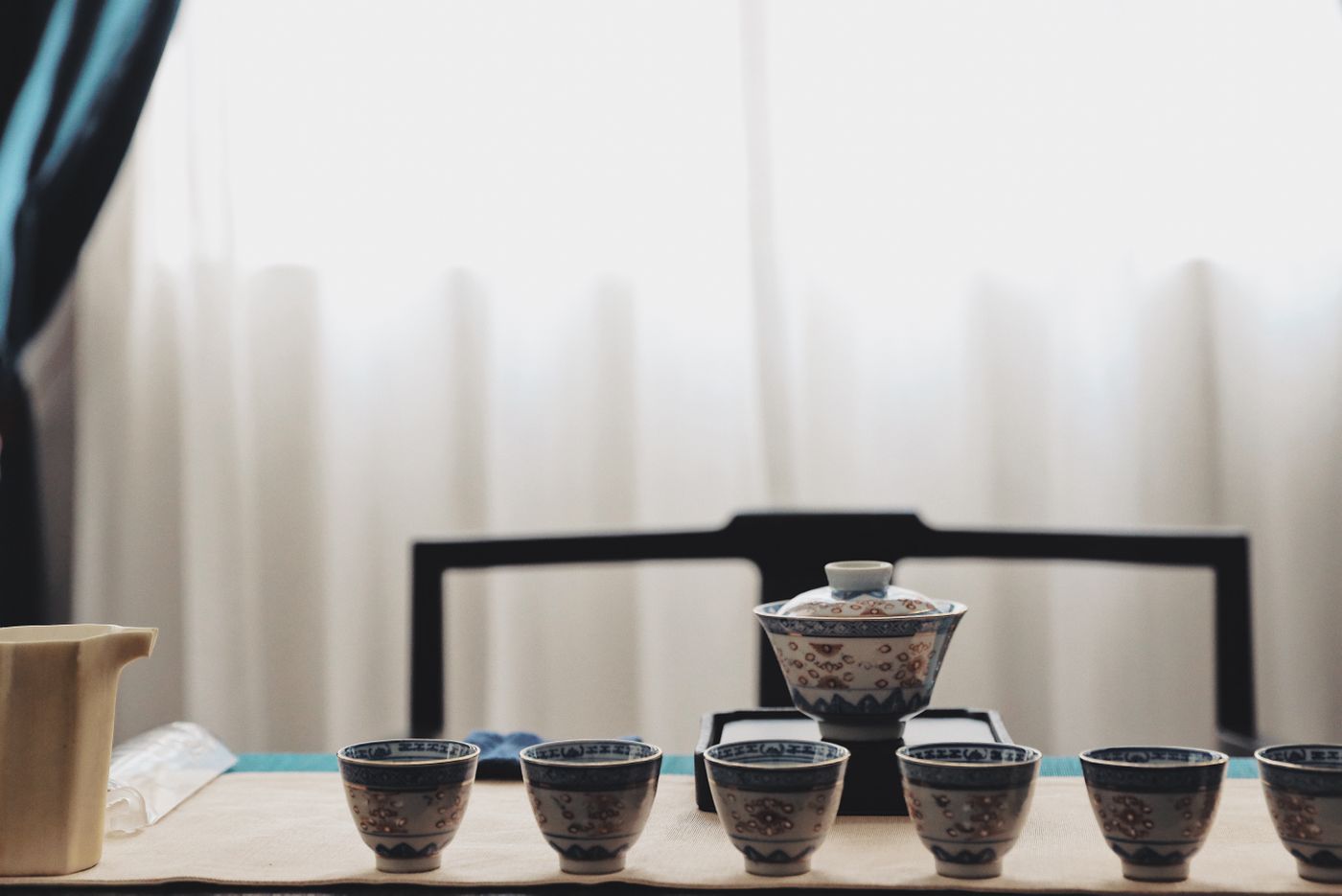
The everyday benefits of Chinese tea
Here is what a plain cup of Chinese tea actually gives you, kept honest.
- Rich in polyphenols. Chinese teas are loaded with polyphenols, the plant compounds behind tea's antioxidant reputation. A plain cup is one of the simplest ways to add them to your day.
- A zero-calorie habit. Plain tea is naturally calorie-free and sugar-free, which is why many people reach for it instead of sweetened drinks.
- Gentle, steady energy. Tea's caffeine comes paired with L-theanine, an amino acid found almost nowhere else, and many drinkers find the combination gives a calmer lift than coffee.
- Antioxidants in every cup. The catechins in green tea and the theaflavins in black tea are among the most studied plant compounds in any beverage.
- Helps mop up free radicals. Antioxidants are the compounds that neutralise free radicals, the unstable molecules the body produces as it uses oxygen, and tea is one of the richest everyday sources of them.
- Hydration that tastes like something. Tea is mostly water and counts toward your daily fluids, with a depth of flavour plain water cannot offer, hot or iced.
- Naturally unsweetened. Most Chinese teas are traditionally drunk plain. A well-made tea needs no sweetener to taste complete.
- Focus without the jitters. The pairing of moderate caffeine and L-theanine is part of why tea has been the drink of scholars and monks in China for centuries.
- Trace minerals from the soil. Tea leaves naturally carry small amounts of minerals, including fluoride, drawn up from the ground where the tea grows.
- A 4,500-year ritual. Tea is one of China's seven daily necessities, and people have built their days around it for millennia. The small pause it creates may be its most underrated benefit of all.
Is Chinese tea good for you?
For most people, plain Chinese tea is a healthy everyday drink. It is calorie-free, it keeps you hydrated, and it carries the polyphenols and L-theanine described above. That is genuinely worth something as a daily habit, especially if it takes the place of sugary drinks.
Now the honest part, and it matters. Tea is a drink, not a medicine. You will see a lot of dramatic health claims attached to Chinese tea online, and we are not going to add to them. Tea does contain caffeine, so if you are sensitive to it, pregnant, or managing a health condition, it is worth being mindful of how much you drink and talking to your doctor about anything specific. Enjoy tea for what it is: one of the oldest and simplest pleasures there is.
Which Chinese tea should you choose?
The best type is the one you will actually drink. If you are new, jasmine green tea or a smooth Yunnan black like Dianhong are the easiest to love. If you already enjoy green tea, try Longjing or Biluochun. I broke this down properly in our honest ranking of the best Chinese teas, and if caffeine is your real question, here is how much caffeine jasmine tea actually has.
Not sure where to start? Browse the loose leaf collection — white, green, oolong, black and pu-erh, all farm-direct — and pick the one that sounds most like you.

FAQ
Is it good to drink Chinese tea every day?
For most people, yes. Plain Chinese tea is calorie-free, hydrating, and an easy daily habit, especially in place of sugary drinks. Because it contains caffeine, keep an eye on how much you drink if you are sensitive, pregnant, or managing a condition, and check with your doctor.
What are the main benefits of drinking Chinese tea?
Plain tea is calorie-free and hydrating, rich in polyphenols and antioxidants, and its caffeine is paired with L-theanine for a calmer kind of energy. Those are everyday benefits, not medical ones. Tea is a drink to enjoy, not a treatment.
Does Chinese tea have any side effects?
The main one is caffeine. Too much, or tea on an empty stomach, can cause jitters or a bit of stomach upset in some people. Drinking it with or after food and keeping to moderate amounts usually settles that. If in doubt, ask your doctor.
Which Chinese tea is the healthiest?
Honestly, the healthiest Chinese tea is the one you enjoy enough to drink plain, without sugar. Less-processed types like white and green keep more of their delicate polyphenols, but all true teas share the same basic profile. Variety matters more than chasing a single superfood.
Are the benefits of Chinese tea different for men and women?
Not really. The everyday benefits, hydration, antioxidants, and calmer caffeine, are the same for everyone. You may see marketing aimed specifically at men or women, but there is no separate set of proven benefits by gender. Drink what you like.