

Da Hong Pao (大红袍, "Big Red Robe") is a roasted oolong from the Wuyi Mountains in northern Fujian, and the most famous of the rock teas known as yancha. It tastes of charcoal, dark stone fruit and wet mineral rock. Almost all of it sold today is a blend of Wuyi cultivars, not tea from the six original mother trees, which have not been harvested since 2006.
The short version
- Da Hong Pao is an oolong, not a black tea, despite the dark leaf and amber liquor.
- It comes from Wuyi, where tea grows in ravines between sandstone cliffs. That ground is where the "rock rhyme" comes from.
- The six mother trees stopped being harvested in 2006. Anything sold as mother-tree Da Hong Pao is not.
- Most Da Hong Pao on the market is a deliberate blend of Wuyi cultivars roasted to a house style. That is normal and not a scam.
- Roast level matters more than almost anything else. Ask about it before you buy.
- Brew it gongfu with a lot of leaf and short steeps. It will give you eight or more.
In this post
What is Da Hong Pao tea?
Start with the place, because with this tea the place is the whole argument. Wuyi is a range of weathered red sandstone in northern Fujian, all sheer monoliths and narrow gorges cut by the Nine-Bend River. UNESCO inscribed Mount Wuyi as a World Heritage site in 1999, for its forests, its scenery and its role as the cradle of Neo-Confucianism. Tea grows in the gaps: narrow terraces on the ravine floors, in gritty mineral soil, in shade for much of the day.
Tea from that ground is called yancha, rock tea. Da Hong Pao is the most famous yancha, alongside cultivars like Rougui and Shuixian. It is picked mature rather than young, oxidised heavily for an oolong, rolled, and then baked over charcoal in bamboo baskets, sometimes across several rounds spread over weeks.
The roast is the signature. It is also why so many people meet Da Hong Pao, decide it is a black tea, and file it away wrongly. Look at the wet leaf after a few steeps and you will see the giveaway: green centres with reddish edges, the classic partial oxidation of an oolong.

The six mother trees, and why nobody drinks from them
On a cliff face at Jiulongke, the Nine Dragon Nest, six old tea bushes grow out of the rock. These are the mother trees, and they are the source of the legend.
The story has several versions and none of them are documented. In the most common telling a scholar on his way to the imperial examinations fell ill near Wuyi, was given tea by monks, recovered, passed, and returned to drape his scarlet official robe over the bushes in thanks. Other versions swap the scholar for an emperor's mother. It is a good story. It is not a medical record, and I would not go further with it than that.
What is documented is the money. In 2005, 20 grams of mother-tree Da Hong Pao reportedly sold at auction for 208,000 yuan, roughly 26,000 US dollars at the time. Do the arithmetic on that and you land north of a million dollars a kilo, which is where the "world's most expensive tea" headlines come from. Earlier auctions in 2002 and 2004 reached comparable figures.
Then it stopped. In 2006 the Wuyishan municipal government suspended harvesting of the mother trees altogether and put them under conservation. The last batch made from them was presented to the National Museum of China. Nobody has legally picked those six bushes in twenty years.
So when a shop offers you mother-tree Da Hong Pao, you are being lied to, expensively and confidently. There is no ambiguity in this one.
What "rock rhyme" actually means
Yancha people talk constantly about yan yun, which translates roughly as "rock rhyme" and sounds like exactly the sort of thing invented to justify a price. I was sceptical for years.
It is a real sensation and a badly named one. Yan yun is the mineral quality that shows up after you swallow: a cool, faintly saline, wet-stone impression at the back of the throat, plus a returning sweetness that arrives late and stays. It is not a flavour you taste on the tongue so much as a texture and an echo. A good yancha keeps talking after the sip is over. A mediocre one goes quiet.
Whether it comes from the mineral soil, the shaded ravine microclimate, the mature leaf, the roast, or all four at once is genuinely argued about. What is not argued about is that experienced drinkers can pick it out blind, and that tea grown in the core scenic area has more of it than tea grown on the flat land outside.
What does Da Hong Pao taste like?
Charcoal and dark fruit up front, then minerals underneath, then a sweetness that turns up after you have swallowed and surprises you. Well-made Da Hong Pao is not harsh, despite the roast. If it tastes like a bonfire and nothing else, it was either roasted badly or has not been rested long enough since firing.
| Where | What you get |
|---|---|
| Dry leaf | Long, twisted, dark brown to near-black; smells of toasted grain and warm stone |
| Liquor colour | Clear orange-amber, never cloudy |
| First steeps | Charcoal, roasted nuts, dried longan or plum |
| Middle steeps | Roast recedes; orchid and cinnamon-bark notes come forward over minerals |
| Late steeps | Clean, sweet, stony; the fruit outlasts the fire |
| Mouthfeel | Thick and coating, low bitterness, slight throat-cooling |
| Aftertaste | Late returning sweetness, mineral echo (the yan yun) |
The first properly good yancha I drank was in a cramped shop in Hong Kong where the owner refused to tell me what it was until the fourth steep. He wanted me to notice the mineral thing before I could attach a price to it. It worked, irritatingly.
Roast levels, and why they decide everything
Two Da Hong Paos from the same harvest can taste like different teas because the roaster made different decisions. This is the single most useful thing to understand before buying.
| Roast | Leaf colour | Character | Who it suits |
|---|---|---|---|
| Light | Brown with green cast | Floral and fruity, roast in the background, minerals easy to find | First-timers, and anyone coming from Tieguanyin |
| Medium | Even dark brown | The classic balance: toast, stone fruit, mineral finish | Most people, most of the time |
| Heavy | Near-black, slightly glossy | Charcoal forward, dense and dry, needs a year or two to settle | Coffee drinkers and the stubbornly traditional |
One thing sellers rarely mention: freshly roasted yancha needs resting. The Chinese term is tui huo, letting the fire go down. Straight off the charcoal a heavy roast is astringent and one-dimensional, and it takes months, sometimes a year, before the fruit comes back through. If a heavily roasted Da Hong Pao tastes like an ashtray, it may not be bad tea. It may just be early.
Da Hong Pao vs. Tieguanyin
These are the two oolongs most people have heard of, and they sit at opposite ends of the category. If you are trying to work out which direction your taste runs, this is the comparison that matters.
| Da Hong Pao | Tieguanyin | |
|---|---|---|
| Origin | Wuyi, northern Fujian | Anxi, southern Fujian |
| Leaf shape | Long twisted strips | Tight rolled balls that unfurl |
| Oxidation | Higher, roughly 40–60% | Lower in modern styles, often 15–30% |
| Roast | Central to the tea, charcoal-baked | Light or absent in green-style TGY |
| Dominant note | Mineral, toasty, dark fruit | Orchid, cream, green sweetness |
| Water temp | Full boil, 100°C | 90–95°C |
| Resteeps | 8–10 | 7–8 |
BornTea does not sell Da Hong Pao. I would rather say that plainly than pretend otherwise in a post about it. Good yancha needs a relationship with a Wuyi roaster and a willingness to buy small lots at real prices, and I have not built that yet.
What I do sell is the other end of the oolong spectrum. If you have never had a Chinese oolong and want to find out whether the category is for you before spending yancha money, start with a Tie Guan Yin and read the full Tieguanyin explainer. If the orchid-and-cream style leaves you cold and you find yourself wanting something darker and more mineral, that is your answer: go and buy Wuyi.

How to brew Da Hong Pao
Boiling water. Not 90 degrees, not "just off the boil". A charcoal-roasted rock oolong needs the full heat to open, and it will not scorch the way a green tea does.
| Method | Leaf | Water | Temp | Time | Resteeps |
|---|---|---|---|---|---|
| Gaiwan (gongfu) | 7–8 g | 110 ml | 100°C / 212°F | Rinse, then 10 s, +5 s each | 8–10 |
| Small clay pot | 7 g | 120 ml | 100°C / 212°F | 15 s, +5 s each | 8–12 |
| Mug or teapot | 3 g | 250 ml | 100°C / 212°F | 2 min | 2–3, add 45 s each |
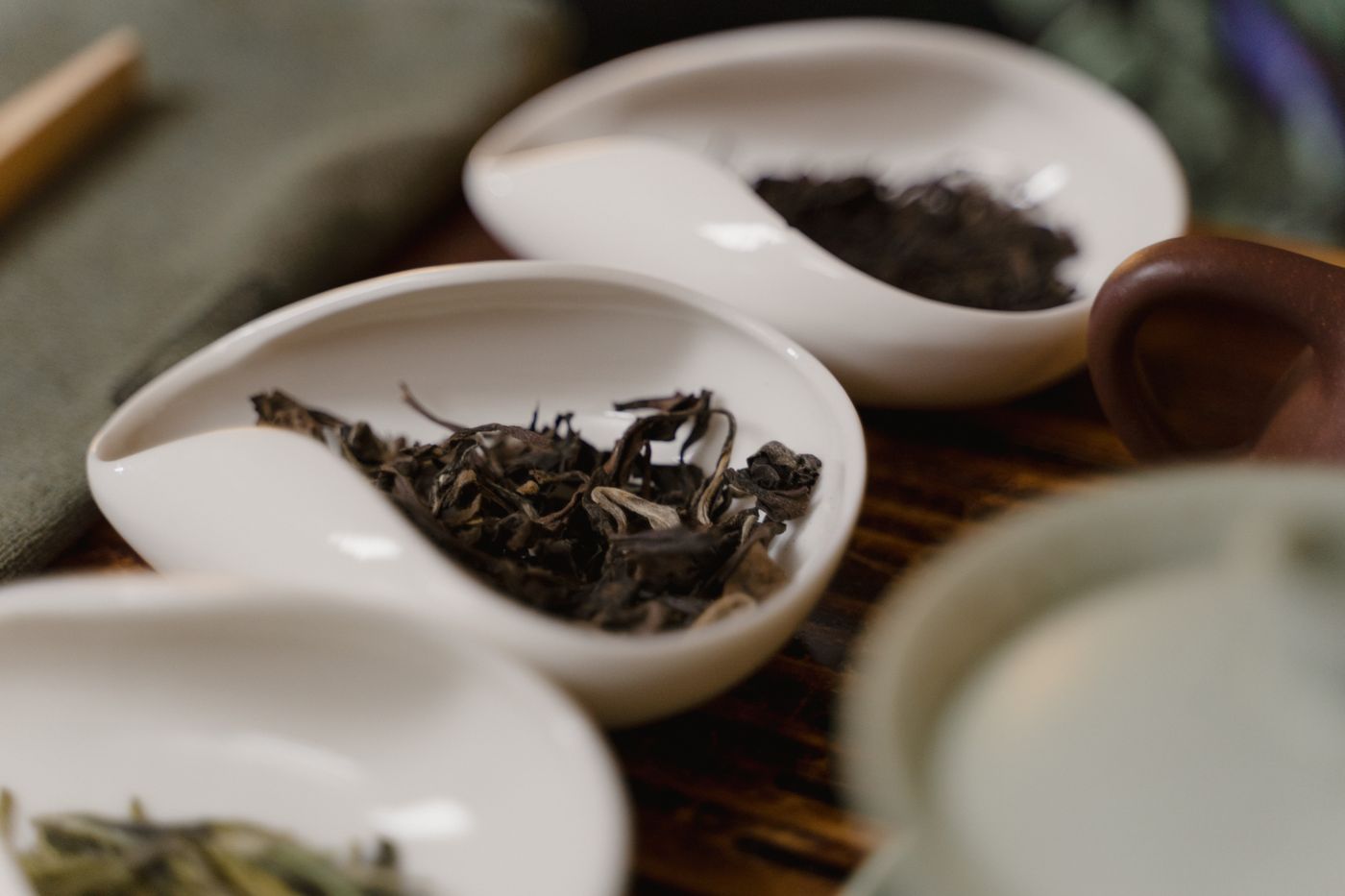
Give it a quick rinse first: a few seconds of boiling water, poured away. With a roasted tea this wakes the leaf up and takes the dusty edge off the first proper steep. Then go short. Ten seconds feels absurd until you taste what a thirty-second steep does to a tea this concentrated. The whole approach is covered in our piece on gongfu brewing without the gatekeeping, and there is more background on the category in the complete guide to oolong tea.
How to buy it without getting fleeced
Da Hong Pao is one of the most counterfeited names in tea, mostly because the legend does the selling. Five things to check.
- Ignore anything claiming mother-tree provenance. Harvesting stopped in 2006. This is the cleanest disqualifier in the whole tea trade.
- Expect a blend, and expect the seller to admit it. Most commercial Da Hong Pao is a purposeful blend of Wuyi cultivars roasted to a house style, or tea from bushes propagated by cutting from the originals. A seller who explains this is being honest. A seller who implies single-bush purity at a supermarket price is not.
- Ask where in Wuyi. Zhengyan, the core scenic area of cliffs and ravines, banyan on the outskirts, zhoucha from the flat riverside land. The mineral character drops off sharply as you move outward, and so should the price.
- Ask the roast level and the roast date. A good seller knows both. A heavy roast from three months ago will not show you what the tea can do.
- Look at the wet leaf. After brewing it should be whole or nearly whole, supple, green-centred with red rims. Broken fragments and a uniform dead brown mean either low-grade material or a roast used to hide it.
My actual opinion, since the title promised one: Da Hong Pao is worth the hype at the middle of the market and absolutely not at the top. A well-roasted, honestly labelled Wuyi blend is one of the great tea experiences and costs no more than a decent bottle of wine. The four-figure tins are buying a story about six bushes on a cliff that nobody is allowed to pick.
FAQ
Why is Da Hong Pao so expensive?
The famous prices came from auctions of tea from six protected mother trees, where 20 grams reportedly reached 208,000 yuan in 2005. Ordinary Da Hong Pao is not priced anything like that. Cost today reflects growing zone, cultivar, hand-roasting labour and how long the tea has rested.
Is Da Hong Pao a black tea or an oolong?
An oolong. The dark leaf and amber liquor come from heavy oxidation plus charcoal roasting, which makes it look like a black tea. Check the brewed leaf: partially oxidised green centres with reddish edges mean oolong. Fully browned leaf throughout would mean black tea.
What does Da Hong Pao taste like?
Charcoal, roasted nuts and dark stone fruit over a wet-mineral base, finishing with a sweetness that returns after you swallow. Good examples are thick and smooth rather than harsh. The roast fades across steeps, letting orchid and cinnamon-bark notes come through later.
Can you still buy tea from the original mother trees?
No. The Wuyishan municipal government suspended harvesting of the six mother trees in 2006 and placed them under conservation, with the final batch given to the National Museum of China. Any product sold today as mother-tree Da Hong Pao is mislabelled.
How many times can you resteep Da Hong Pao?
Eight to ten steeps brewed gongfu style with roughly 7 grams to 110 ml, adding about five seconds each time. Good rock oolong holds its sweetness deep into a session. In a western mug with less leaf, expect two or three worthwhile brews.
Not ready to chase yancha yet? Start where the oolong road begins and work outward: our Tie Guan Yin comes straight from Anxi, tested for pesticides and heavy metals, in packaging that composts.